
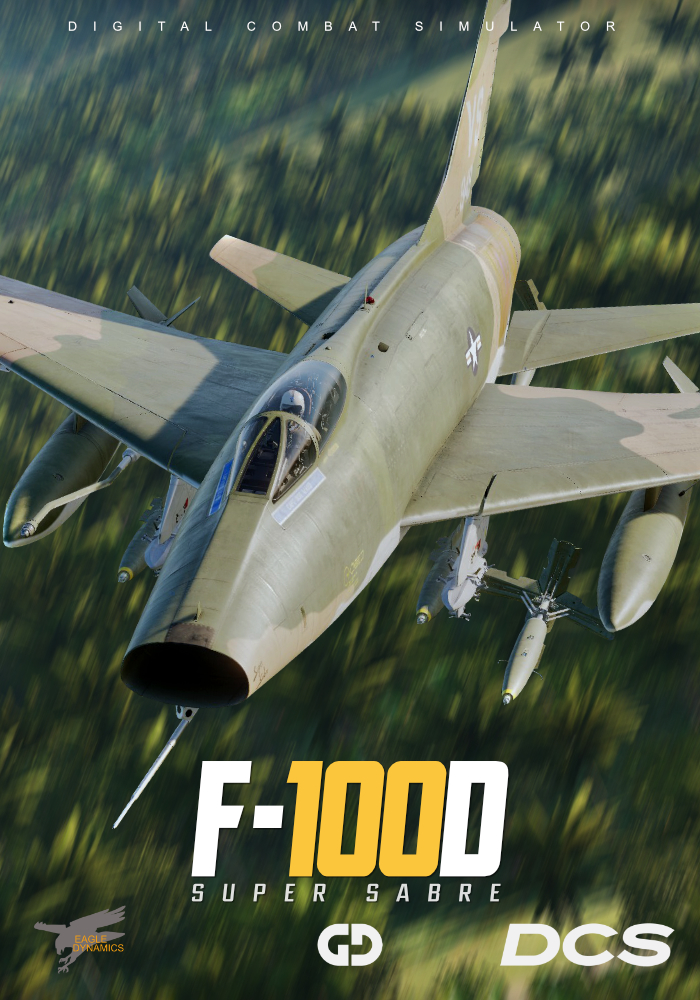
F-100D Super Sabre

For DCS World
DCS F-100D
Collector’s Edition
Original price was: $59.99.$47.99Current price is: $47.99.

$35.00
dcs F-100D information
The F-100D Super Sabre module for DCS world created by the Grinnelli Designs team.
Collector's Edition information
Commemorate the launch of the F-100D for DCS World with this limited memorabilia set. Includes the following:
- “Remove Before Flight” keychain
- Kumi the Catfish plushie
- 4″ Fighting Catfish patch
- 3″ Grinnelli Designs patch. Limited to 100 units
Note: This edition does not include the digital F-100D module for DCS World.
General
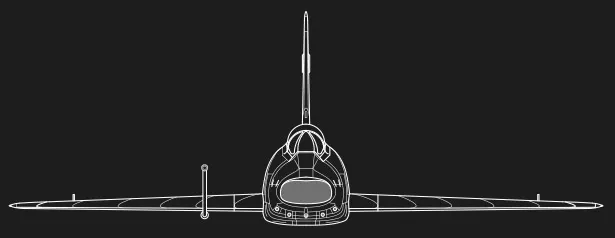
Manufacturer — North American Aviation
Role — Bomber/Fighter
Crew — 1
Length — 54 ft, 3 in (with pitot extended)
Winspan — 38 ft, 3 in
Height — 16 ft, 3 in
Empty Weight — 21,000 lbs
Gross Weight — 27,000 lbs
Powerplant — Pratt & Whitney J57-P-21
Performance
Max Speed — Mach 1.2/864 mph
Thrust — 10,200 lbs
Max Thrust + Afterburner — 16,000 lbs
Service Ceiling — 50,000 ft
Rate of Climb — 22,400 ft/minute
Max Range — 1995 nm
Max Takeoff Weight — 34,832 lbs
Armament
Guns — Four M39 Pontiac 20mm Cannons
200 rounds per cannon
Hardpoints — 6 Pylons
Missiles & Rockets
AGM-12 Bullpup
AIM-9 Sidewinder
LAU-3/A 2.75-inch unguided rocket dispenser
Bombs & Explosive Ordinance
Napalm Canisters
Cluster Bombs
Mk 7, Mk28, Mk43 Nuclear Bomb
service history
First Flight — May 25, 1953
Introduction — September 27, 1954
Retired — 1979 (US ANG)
Production Years — 1953 – 1959
Unit Cost — $697,029 (1954)

LEGACY
The F-100D “Hun” entered service in 1956 as the U.S. Air Force’s definitive fighter-bomber. Succeeding the legendary F-86, it was the first fighter aircraft capable of supersonic speed in level flight. Although developed as a day air-superiority fighter, the F-100 family eventually saw the F-100D repurposed as a ground-attack platform. Extensive use of the F-100D during the Vietnam War made it the most widely produced variant.
Building on the legacy and performance of its predecessor, the F-100’s distinctive 45-degree swept-wing design introduced unique handling challenges at low speeds. In particular, inexperienced pilots could encounter the notorious “Sabre Dance”: A phenomenon resulting from increasing adverse yaw, inertial coupling, and wing-tip stall.
Armament
The F-100D is equipped with four 20 mm Pontiac M39 cannons mounted in the lower fuselage beneath the cockpit, providing formidable firepower.
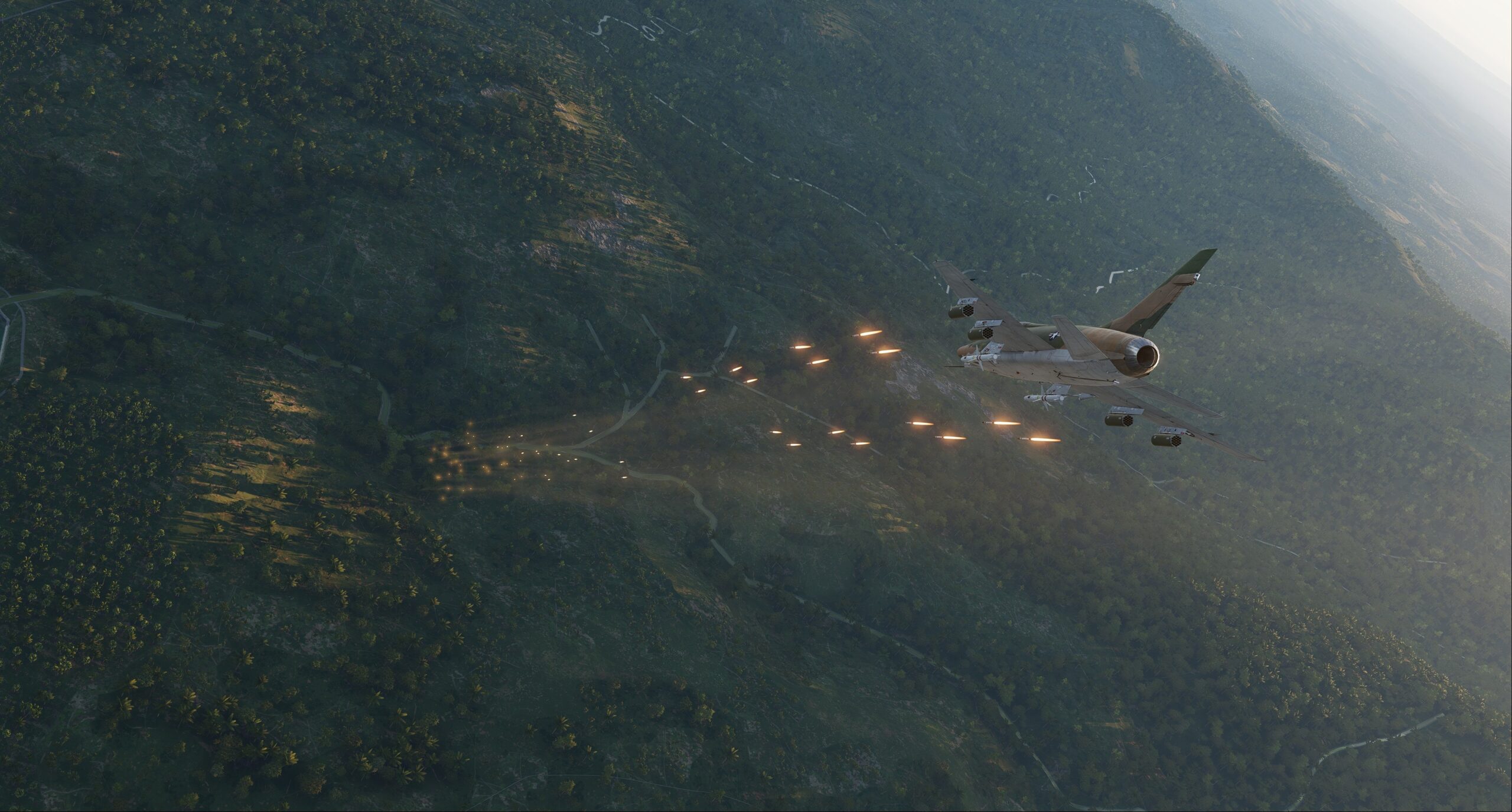
It is capable of carrying up to four AIM-9 Sidewinder air-to-air, infrared-guided missiles for targeting enemy aircraft. The aircraft also features six underwing hardpoints that can carry a total payload of up to 7,040 lb of conventional bombs, rockets, napalm, and the AGM-45 Shrike anti-radiation missile used to attack radar installations.
To support both aerial gunnery and air-to-ground bombing, the aircraft is equipped with a fire control system that helps the pilot accurately aim and release weapons.
To further enhance operational effectiveness, the F-100D features the “high wire” modification that standardizes instruments and avionics. This includes the AN/APR-25 Radar Homing And Warning receiver (RHAW), which alerts pilots to threats from surface-to-air missiles (SAMs). For example: The RHAW can detect radar emissions from systems like the Fan Song tracking radar that guides SA-2 Guideline missiles.
features
- Highly detailed cockpit and external model: Crafted from thousands of photos, photogrammetry, and laser scans of an F-100D museum aircraft.
- Extremely accurate flight model (EFM): Tested against actual short- and long-period dynamics reports to achieve exact handling qualities that have also been verified by actual F-100 pilots.
- Detailed era-correct F-100D pilot model
- Zero-length launch: A rocket-mounted system for launching the aircraft from a standstill with a full combat payload.
- Configurable strike and gun cameras: Record weapons fire so that pilots can review in debriefs.
- Customizable dash: Set up core gauges the way you want them, or randomize the setup for an authentic experience.
- High-quality cockpit audio: Recorded from an actual F-100.
In-depth systems modeling:
-
- Electrical system: A fully-simulated electrical system model provides accurate voltages, currents, and power consumptions of electrical components.
-
- Hydraulic system: Simulates hydro-mechanical flow and physically modeled actuators.
-
- Radio navigation equipment: Including UHF Radio direction finding, ADF, and TACAN.
-
- Thermodynamic engine model: Includes engine compressor stalls and surges, oil, gearbox, ignition, and afterburner physics.
-
- Multiple probe and afterburner configurations: Integrated into the flight and engine models. Two afterburner models are provided: The J-57-P-21 and J-57-P-23. Pilots flying the older J-57-P-21 experience longer afterburner light times, more frequent failures to light, and more frequent compressor stalls.
-
- Physical simulation of pilot interfaces: Including gauges, friction, and mass to achieve realistic dynamics on gauges and other moving parts.
-
- Temperature simulation of aircraft brakes: Includes brake fade and smoke when brakes are too hot.
-
- Radar homing and warning receiver: Includes detailed radar signal simulation, dynamically generated unique sounds for all radar units, and a scope that displays radar vectors for three specific threat bands.
-
- Detailed weapon systems: Includes guns, air-to-air missiles (including new AIM-9E Sidewinder), air-to-ground missiles (AGM-45 Shrike), bombs, rockets, and two new cluster dispensers (CBU-38 and CBU-7).
-
- Fire control system: Incorporates a ranging radar, gyroscopic air-to-air gunsight, and an early form of computer-assisted bombing.